Pest Control Service Arnold work starts with the cause, not the sprayer: ants trailing a kitchen counter in Ferry Farms, mouse droppings under a sink in Bay Hills, and yellowjackets at a deck soffit in Pines on the Severn each trace back to a specific gap, moisture source, or food line. Every visit begins with an on-site inspection of the foundation, sill plate, crawlspace, soffits, and grade, and ends with a written finding you can read in plain English.
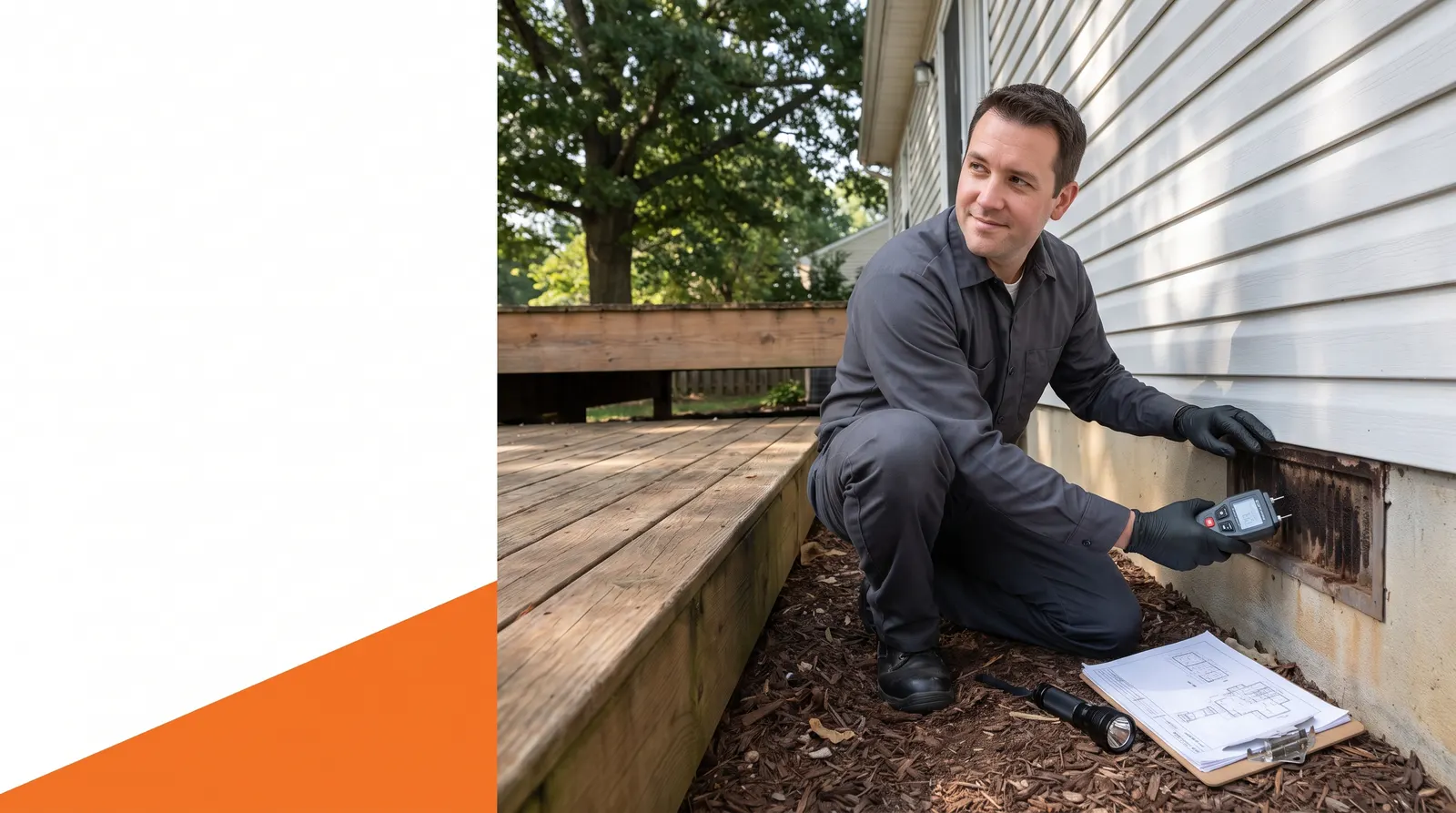
Pest control service in Arnold is a diagnostic and treatment service that identifies the condition letting pests in — moisture, foundation gaps, soil grade, or tree and shrub contact with siding — then treats the active pest and seals the entry points on Broadneck-peninsula homes.
Every service reflects the same meticulous attention to detail — whether it's a single job or a larger pest control service project across Arnold.
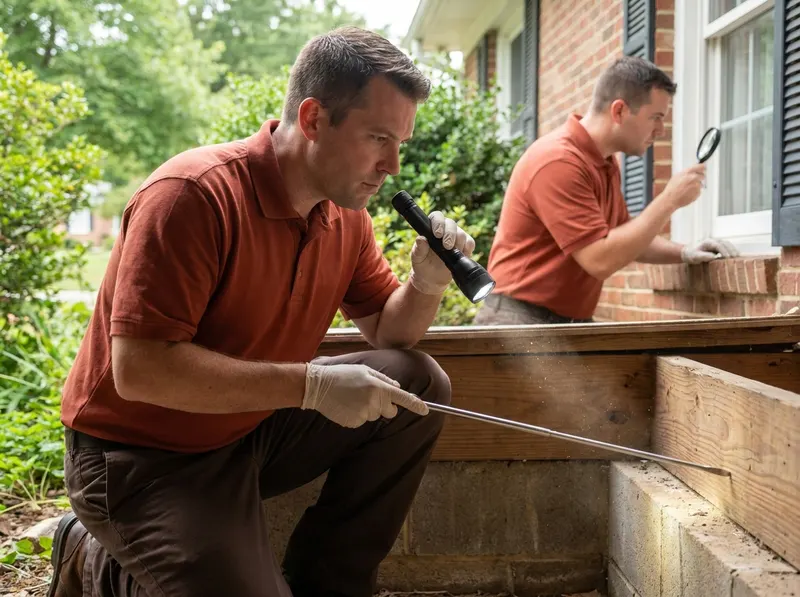
A full inspection of the areas pests actually use: foundation and sill plate, crawlspace or basement perimeter, soffit and fascia lines, garage door corners, utility penetrations, mulch depth, and where shrubs or tree limbs touch siding. Arnold homes on wooded lots and older waterfront-adjacent parcels often show two or three separate entry conditions at once, which is why guessing from the counter never holds. You get a written finding that names the pest, the condition feeding it, and the next step — inspection is also the correct starting point for a settlement or lease concern flagged by an agent or tenant.
View details →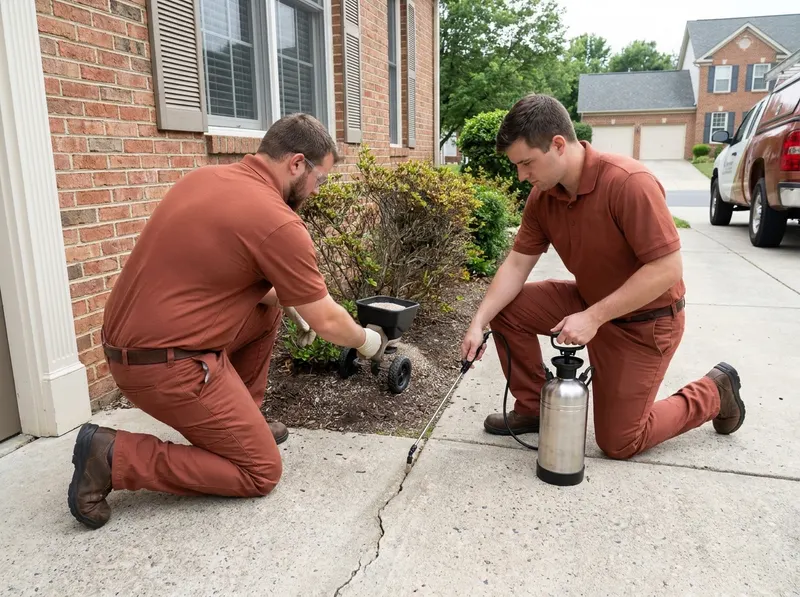
Odorous house ants and carpenter ants drive most spring ant calls in Arnold, and the two need opposite treatments. Odorous house ants are a foraging and moisture problem — they follow slab edges and plumbing lines into kitchens after April through June rains, and again during a late-summer dry spell when outdoor water disappears. Carpenter ants are a wood-condition problem, nesting in water-damaged trim, deck ledger boards, and fascia behind failed gutters, which is common on shaded homes near Broadneck Park. Treatment is baited and targeted at the trail and nest, not a baseboard fog, and the moisture source is named in the report so it stops being a yearly event.
View details →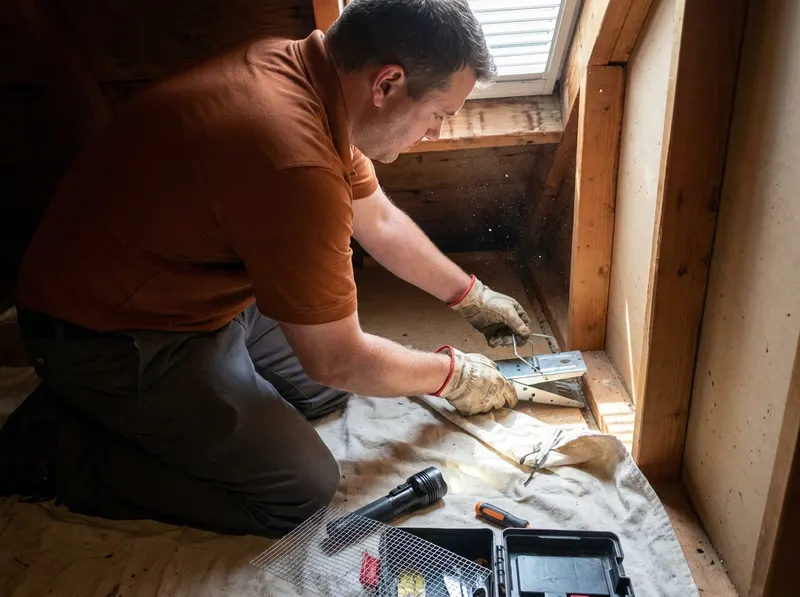
Mouse work in Arnold is a two-part job: remove the animals inside, then close the openings they used. House mice enter through gaps a pencil fits into — dryer vents, garage door bottom corners, hose bib and A/C line penetrations, and the sill plate above the foundation — and call volume climbs sharply from the first cold snap in October through January. Service includes interior trapping placement in the runs behind appliances and under sinks, droppings and activity mapping to find the entry, and exclusion using sealant, hardware cloth, and door sweeps. Attic and crawlspace activity is checked on the same visit, because rodents rarely use only one route.
View details →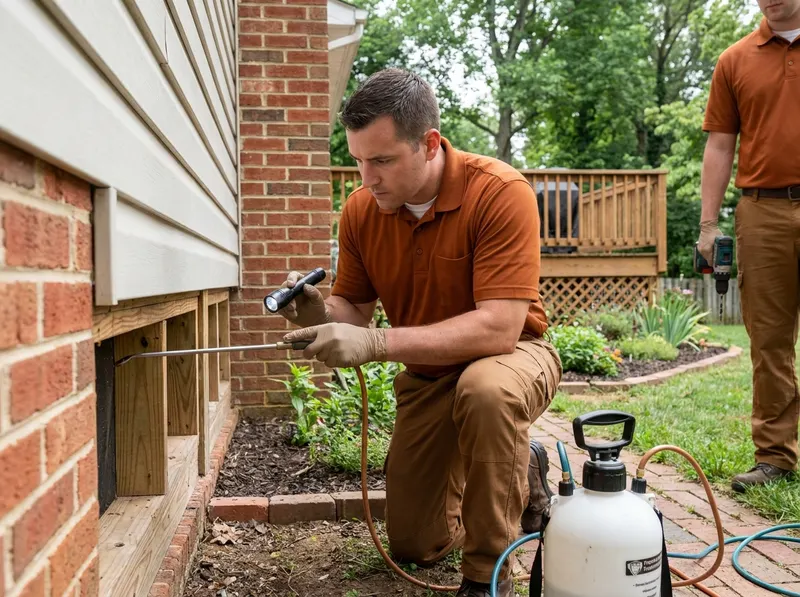
Eastern subterranean termites swarm in Arnold hardest from mid-March through May on the first warm, humid afternoons, and swarmers indoors near a window or basement sill are the most common way homeowners discover them. Inspection covers the foundation exterior, expansion joints, crawlspace piers, sill plate, and any wood-to-soil contact such as deck posts, landscape timbers, and fence rails — all frequent on the larger wooded lots in Ulmstead Estates and Winchester on the Severn. Treatment is scoped to what is found: localized treatment for an isolated area, or a full soil treatment around the structure. February and early March are the best booking window, before swarm season loads the schedule.
View details →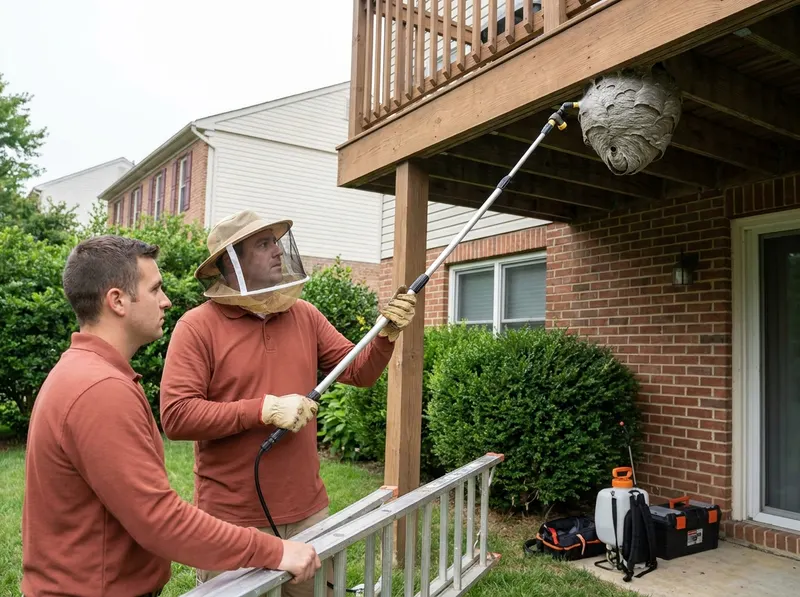
Yellowjacket and wasp calls spike in Arnold from August into September, when colonies peak and become aggressive around decks, sheds, pier structures, and shaded soffits. Bald-faced hornet nests appear in shrubs and low tree limbs; paper wasps build under railings and grill covers; yellowjackets nest in ground voids and inside wall or soffit cavities where they are easy to walk into. Service treats the nest at the source and removes accessible nests rather than leaving material behind that attracts scavengers. Same-day scheduling is prioritized for nests at a door, deck stair, or child play area — call (667) 363-4217 and describe the location and height.
View details →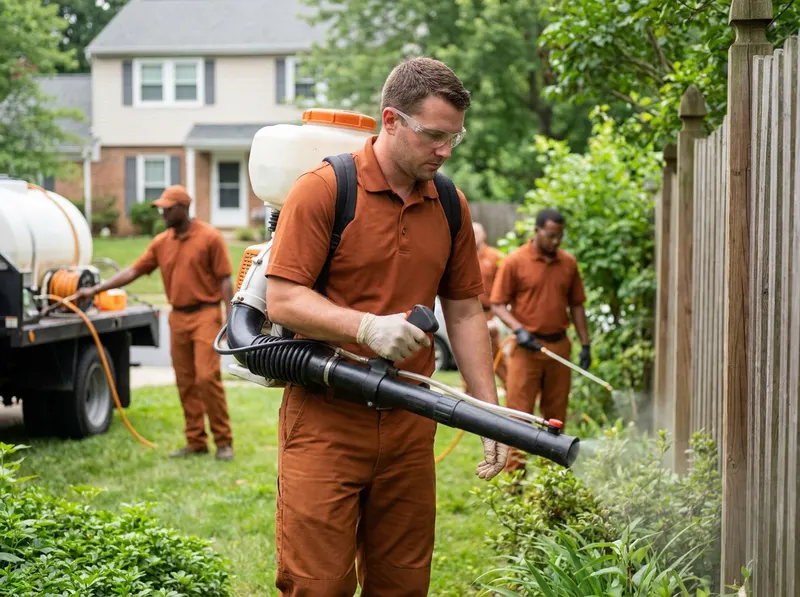
Mosquito and tick season on the Broadneck peninsula runs April through October, with the worst pressure June through August along the Magothy and Severn shorelines where humidity, shade, and standing water hold together all summer. Treatment targets resting sites — dense shrub undersides, ivy beds, wood lines, and the shaded fence perimeter — rather than open lawn, and includes a walk for breeding water in gutters, tarps, kayaks, planter saucers, and unused birdbaths. Yard programs run per-treatment on roughly a three-to-four week interval through the season. Spring calendars fill in March and April, so early booking matters if you host outdoors.
View details →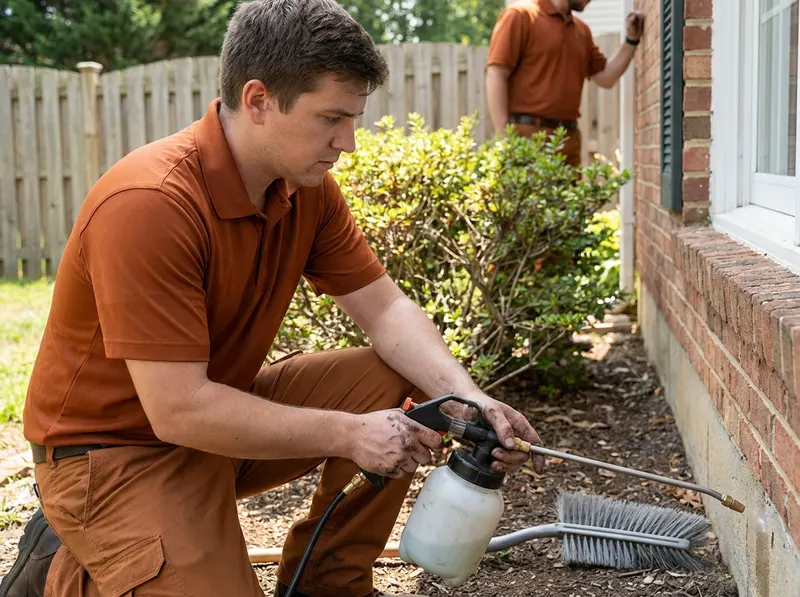
Spiders, camel crickets, boxelder bugs, brown marmorated stink bugs, and cluster flies are perimeter and cavity pests, not interior ones, so treatment is built around exclusion plus a targeted exterior application. Stink bugs and cluster flies move to sunny south and west walls in late September and October, then enter through window frames, attic vents, and behind siding — which means exclusion work should be scheduled by early September to be useful. Camel crickets are a crawlspace humidity problem common in older Arnold homes near the water; service names the moisture and vent conditions feeding them instead of treating the same basement corner every year.
View details →
Small commercial and rental work in Arnold covers offices, salons, food-service back-of-house, self-storage, and single-unit or multi-unit rentals near the Anne Arundel Community College Arnold campus and the Ritchie Highway corridor. Service is scheduled around business hours where possible, documented per visit so a property manager or landlord has a paper trail for a tenant complaint or an inspection finding, and scoped by pest and unit count rather than sold as a blanket contract. Rodent, ant, cockroach, and fly issues are treated at the source — dumpster placement, floor drains, door sweeps, and delivery-door gaps are inspected as part of the visit.
View details →Pest control service in Arnold is a diagnostic and treatment service that identifies the condition letting pests in — moisture, foundation gaps, soil grade, or tree and shrub contact with siding — then treats the active pest and seals the entry points on Broadneck-peninsula homes.
You get a firm, itemized quote for your pest control service before any work begins — no surprises, no pressure.
Careful prep, tidy work, and a full cleanup when we are done. We treat your home and belongings like our own.
The same trusted, background-checked team from the first call to the final check.
The real decision in Arnold is not which chemical — it is how many visits your problem actually needs. If you have one visible problem with a clear start date, such as a single wasp nest under a vinyl soffit or an ant trail that appeared after a heavy April rain, choose a one-time treatment: one visit, one price, usually $250 to $450, and no ongoing commitment. If the same pest keeps returning every four to six weeks — odorous house ants in spring, spiders and crickets in late summer, mice in October — choose a seasonal exterior perimeter program, because repeat pressure is a sign the pest is being resupplied from outside and a single interior spray will only reset the clock. If you have mice, choose exclusion over trapping alone: traps remove the animals present, sealing the sill plate, dryer vent, garage door corner, and utility penetrations stops the next family from following the same scent trail. If you are selling or settling on a home near Broadneck High School or refinancing, choose a standalone inspection with a written report rather than a treatment, since the lender or buyer wants the findings, not the spray. The trade-off is honest: a one-time visit is the cheapest way to end a visible problem but carries no forward protection; a seasonal program costs more across a year but is the only approach that manages the constant outdoor pressure a wooded, waterfront-adjacent peninsula creates; and exclusion work costs more up front than a bait station because it involves ladders, sealant, hardware cloth, and labor — then keeps working with no product at all. If you only want one thing from this page: ask which condition caused your pest problem, and do not accept "we'll spray quarterly" as the answer.
Every project gets a firm, written price after a free on-site visit. Ranges below for orientation.
Tell us about your pest control service job and we'll send a clear, written quote — usually the same day. Or just call and talk to a real Arnold pro.
(667) 363-4217
Arnold sits on a narrow peninsula with the Magothy River on one side and the Severn River on the other, and that geography is the whole story for pest pressure here: shallow water tables, shaded mature tree canopy, and humid air that lingers well past sunrise. The practical effect is that crawlspaces stay damp longer than they would a few miles inland, which is why camel crickets, carpenter ants in water-damaged trim, and subterranean termite activity around deck posts and landscape timbers show up repeatedly on the older waterfront-adjacent lots in Manhattan Beach, Sunrise Beach, and Winchester on the Severn. Wooded edges along the Baltimore & Annapolis Trail Park, Broadneck Park, and the Bay Hills Golf Club fairways also hold tick and mosquito habitat right up against back fences, so yard treatments here are aimed at the wood line and shrub undersides rather than open turf. Treating a symptom on a peninsula like this without correcting the moisture or grade behind it just buys three weeks.
Free estimates for Arnold & the surrounding area.
 Pestnivo Pest Control